
How to Design Stickers That Sell: A Brand Guide
Die-cut, kiss-cut, holographic, transparent — and the design choices that turn a sticker from packaging into marketing.
A great sticker is the cheapest brand asset you will ever produce, and one of the most powerful. It rides on every laptop, water bottle, packaging carton and shopfront window — turning your customers into walking billboards. Here is how we approach sticker design at Double Print, and how you should think about your next batch.
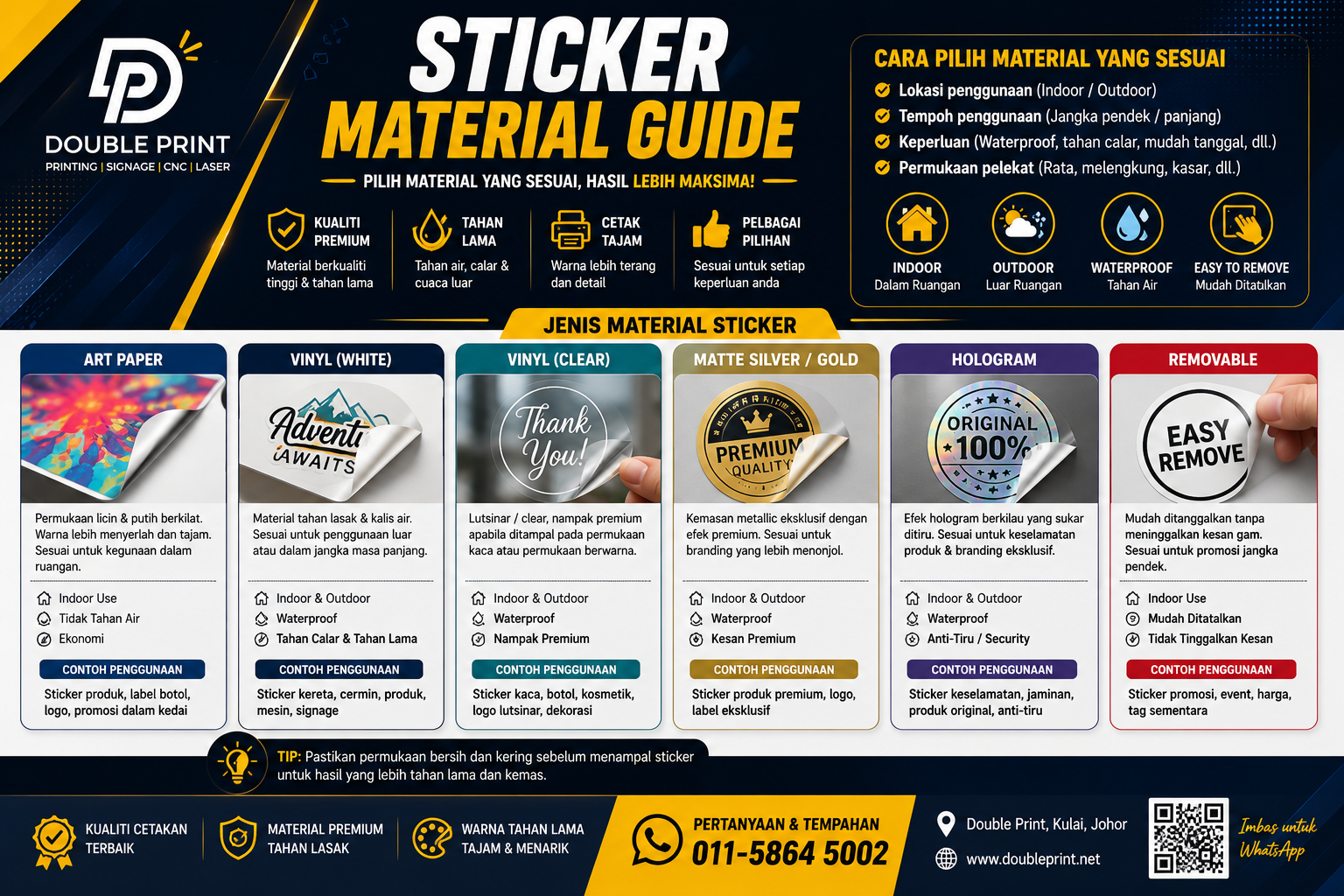
The Six Sticker Types You Should Know
Die-Cut Stickers
Cut to the exact shape of your design with no rectangular border. Premium feel, premium price, and the only way to make a sticker that looks like a designed object rather than a printed rectangle. Our default recommendation for brand stickers.
Kiss-Cut Stickers
The vinyl is cut through but the backing paper isn't — leaving a printed border around the sticker. Cheaper than fully die-cut and easier to peel. Ideal for sticker sheets and small giveaways.
Transparent Stickers
Printed on clear vinyl. The "no border" look on glass shopfronts and clear bottles. Print a white underlay layer first if your design has light colours that need to read on a dark background.
Holographic Stickers
Rainbow-foil stock that shifts colour under light. The single most-attention-grabbing sticker option in our range. Used well, they signal "limited edition" and "premium". Used poorly, they look like a Pokémon card. Reserve them for hero stickers, not utility labels.
Vinyl Outdoor Stickers
Cast vinyl with UV-stable inks and a protective laminate. 5-7 year outdoor life. The right choice for vehicle decals, helmet stickers, surfboard branding and any sticker that will live outdoors.
Product Labels
Pressure-sensitive paper or BOPP labels printed in rolls, supplied with or without die-cutting. The choice for any consumer-product brand selling on shelves — bakery, beverage, beauty, supplement.
Designing a Sticker That Actually Works
1. Make the brand mark the hero, not the product description.
A sticker is not a label. It is a brand impression. Lead with the symbol, the wordmark, or a single iconic illustration. If a viewer needs to read three lines of text to understand it, you have designed a small poster, not a sticker.
2. Design for the shape, not for the page.
Most sticker artwork starts life on an A4 page and only later gets cut into shape. The result is awkward — important elements crammed into the centre with empty borders. Design with the cut shape in mind from the start.
3. Bleed and safe area, no exceptions.
Build a 3mm bleed beyond the cut line, and a 3mm safe area inside it. Cutting tolerances are not zero — text or icons placed too close to the edge will be trimmed.
4. Use bold colour and bold contrast.
Stickers compete for attention in a chaotic visual environment (laptops, suitcases, water bottles). Soft pastels and thin grey type are lost. Strong colour, strong contrast, strong shapes — these win on a sticker.
5. Don't ignore the back.
For premium product labels, consider printing on the underside of clear vinyl ("reverse-printed"). The label looks deeper and protected, because the print is sealed against the surface beneath the laminate.
"A great sticker doesn't ask to be put somewhere. It asks where it gets to go next."
Adhesives Matter More Than You Think
Most clients never ask about the adhesive — until they realise their stickers are falling off. The two main options:
- Permanent adhesive. Sticks aggressively, stays. The default for laptop stickers, packaging seals, vehicle decals.
- Removable adhesive. Peels cleanly without residue. The right choice for promotional stickers on shop windows, temporary signage, anything that will be replaced.
For curved surfaces (helmets, bottles, hard hats), specify a thinner vinyl — 60μm or thinner — so the sticker conforms without lifting at the edges.
Run Sizes and Cost
Sticker pricing is heavily quantity-driven because most of the cost is in setup. A run of 50 die-cut stickers may cost RM 2-3 per unit; a run of 1,000 of the same sticker drops below RM 0.40 per unit. If you are unsure, order 200-500 — enough to feel the value of having stickers everywhere, without committing to a quantity that will sit in a drawer.
Send us a vector file (AI, PDF, SVG) of your design and the dimensions you have in mind. We will respond with material recommendations, a printed sample, and a transparent per-unit price. If you don't have a designer, our in-house team can refine your concept into print-ready artwork.
Notes from the press floor at Double Print, Kulai. We print, cut, engrave and craft for businesses across Johor and beyond. Send us a brief.