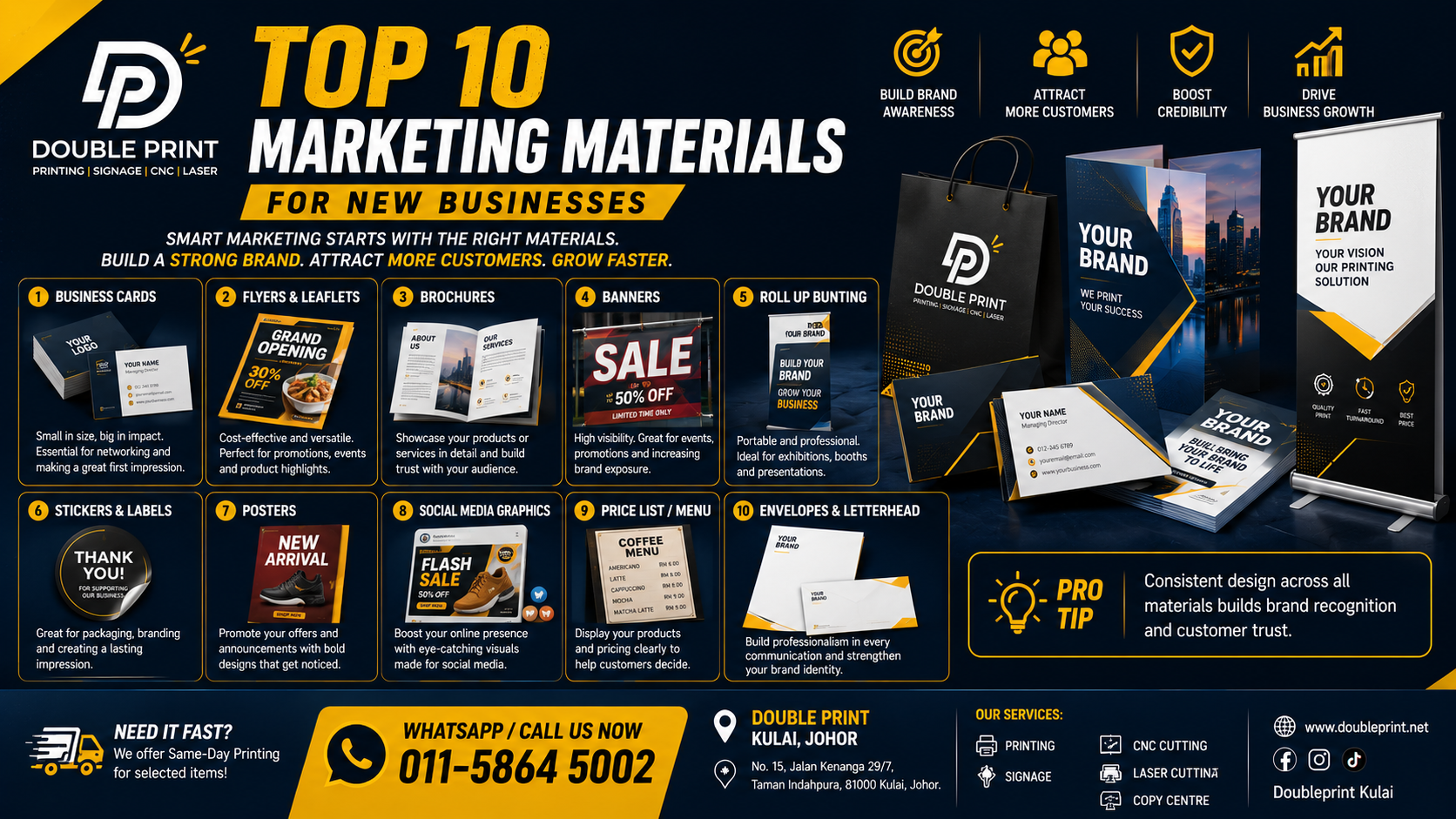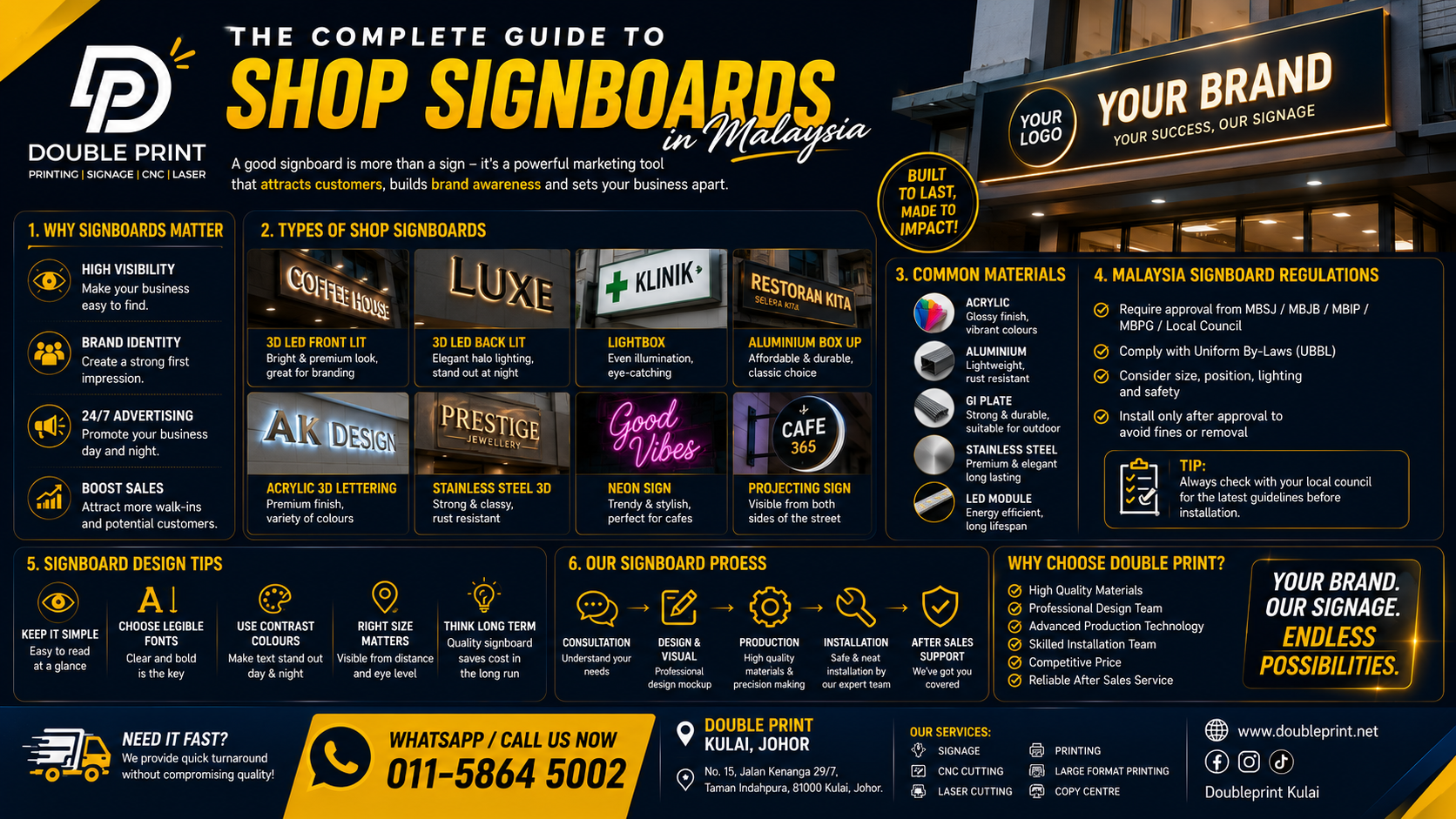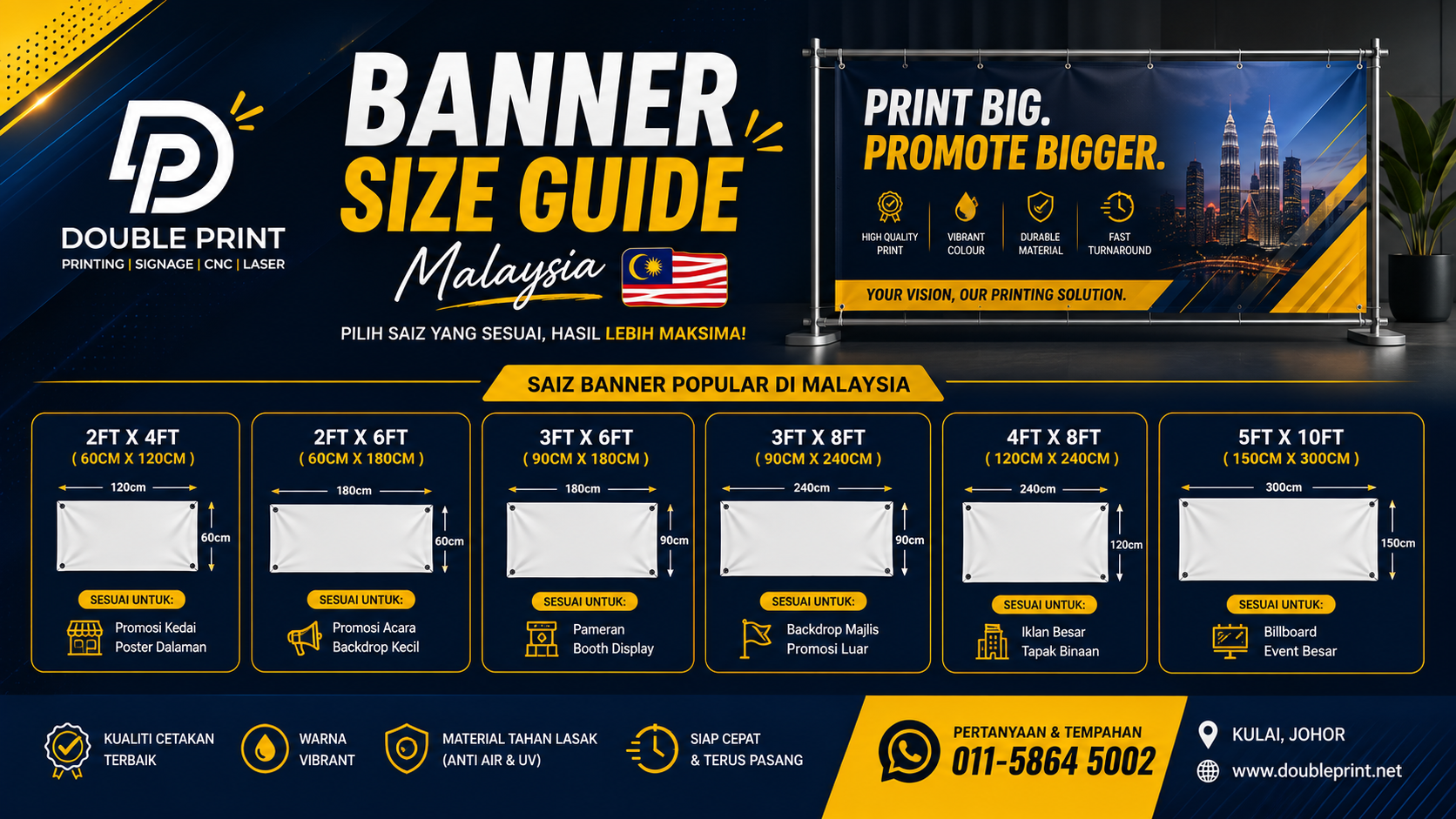

Restaurant Menu Printing in Malaysia: Design, Materials & What Actually Works
A menu is your highest-margin marketing asset. Here is how to design and print one that earns its place on the table.
A restaurant menu is the only printed object in the building that every guest will hold, read carefully, and use to make a decision worth real money. Treated as a design problem, it can lift average ticket size by 5-15%. Treated as an afterthought, it leaks revenue at every cover. Here is how we approach menu printing at Double Print, and the choices that genuinely matter.
Choose Your Format Before You Touch the Layout
The Single Folded Card (the classic)
An A3 sheet folded in half to A4, or A4 folded in half to A5. Sturdy, clean, easy to update by reprinting. The right format for casual cafés, mid-tier restaurants and lunch menus.
The Booklet (multi-page)
Perfect for fine-dining, multi-course menus, wine lists and venues with a deep menu architecture. Saddle-stitched (stapled) or perfect-bound depending on page count.
The Single Card / Insert (refresh-friendly)
A laminated single card slotted into a leather or kraft cover. Update the insert without reprinting the cover. The smartest choice for restaurants that change their menu monthly or seasonally.
The Tabletop Easel / Tent Card
For specials, drinks-only menus or QR-code-driven digital menus. Doesn't replace the main menu; complements it.
Material Choices That Survive a Service
Restaurant menus take a beating. They're handled by 100+ different people every day, set down in spilled coffee, dropped on the floor. The material decision is operational, not aesthetic:
- Synthetic paper (Yupo / PolyArt) — looks and feels like paper but is actually plastic. Waterproof, tear-resistant, washable with a damp cloth. Our default for high-traffic menus.
- Laminated card stock — 250-350gsm card with matte or gloss laminate on both sides. Water-resistant, wipeable, will last 6-12 months in heavy service.
- PVC-coated card — heavy laminated finish that's nearly indestructible. Used by hawker stalls, kopitiams and mamak restaurants for menus that survive 5+ years.
- Uncoated premium stock (no laminate) — for fine-dining venues that change menus daily. The tactile experience is part of the brand. Replace, don't preserve.
Lamination: Matte vs Gloss
Almost universally, matte. Gloss laminate creates glare under restaurant lighting, makes photography reflections obvious, and ages poorly (visible scuffs and scratches). Matte is more forgiving, more elegant, and doesn't fight your photography.
Designing a Menu That Actually Sells
1. Lead with your most profitable item, not your most popular.
The first item in each section is the one most often ordered by indecisive guests. Place a high-margin signature dish there, not your cheapest option.
2. Drop the dollar sign, drop the decimals.
Studies on menu pricing are clear: writing "RM 28" is more effective than "RM 28.00", and the dollar sign or RM prefix increases price-anchoring. The cleanest format for a Malaysian menu: 28. Just the number.
3. Don't use a single price column.
A column of right-aligned prices invites guests to scan vertically, compare prices, and pick the cheapest. Place the price inline with the description, slightly de-emphasised, so guests engage with the dish first and the price second.
4. Use descriptive copy.
"Slow-cooked beef rendang, hand-pounded rempah, kerisik" outsells "Beef Rendang" by a measurable margin. Three to six descriptive words per dish is the sweet spot — more reads as marketing, less reads as a stocklist.
5. Use photography sparingly.
Ironically, heavy photography is associated with mid-tier and budget restaurants. Premium venues lean on typography, not images. Use photography for one or two hero dishes per page, never for everything.
"A menu isn't a list of things you sell. It's a guided tour through what you do best."
Bilingual Menus, Done Properly
Most Malaysian menus need at least Bahasa Malaysia and English; many also need Mandarin or Tamil. The two approaches:
- Stacked translation — dish name in primary language, translation immediately below in a smaller, lighter weight. Cleanest for two-language menus.
- Mirror layout — left page in one language, right page in another. The right choice for three-or-more language menus or premium foreign-tourist venues.
Don't try to translate everything word-for-word. "Sambal" doesn't need translating. Neither does "char kway teow". Some words are the dish.
QR Codes — The Honest Take
QR-code-only menus surged during the pandemic and have largely retreated. The data is clear: guests order less from a phone screen than from a printed menu, scroll fatigue causes them to default to familiar items, and the digital menu rarely conveys brand. We recommend a printed menu as primary, with a QR code for live updates (today's specials, sold-out items, allergen info) on a small tabletop card.
Realistic Costs in Johor
- Single laminated card menu (A4): RM 4-9 per piece, depending on stock and laminate.
- Folded matte-laminate menu (A3 → A4): RM 8-15 per piece.
- Synthetic-paper Yupo menu: RM 12-22 per piece, but lasts 5x longer than coated card.
- Hardcover leather menu folder + insert: RM 80-180 per folder, plus RM 3-6 per insert reprint.
Send us your venue capacity, expected daily covers and a sense of the brand (casual / mid / fine), and we'll recommend the format and material that fits. We've printed menus for cafés in Kulai, fine-dining venues in Iskandar, and chains across southern Johor — we can match you to the right spec.
Notes from the press floor at Double Print, Kulai. We print, cut, engrave and craft for businesses across Johor and beyond. Send us a brief.